Don Quixote–Sancho Panza relationship
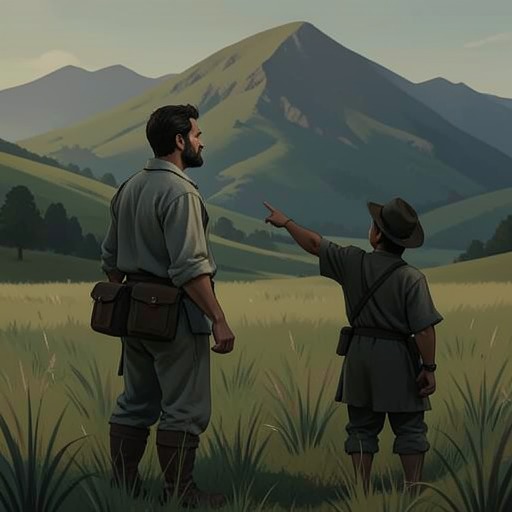
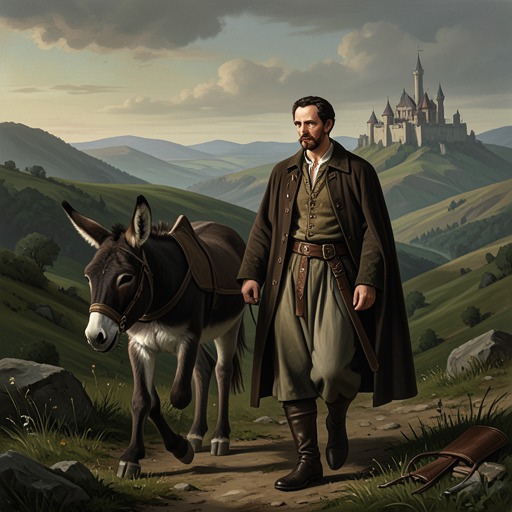
Don QuixoteDon Quixote–Sancho Panza relationship is a bond of service and companionship repeatedly tested by danger, mismatched expectations, and disagreements over authority. Sancho tries to protect Don Quixote from needless peril, yet also hopes that service will bring rewards for himself and his family. Don Quixote depends on Sancho’s practical assistance but expects him to honor the formal distance between knight and squire. Their relationship is therefore neither simple obedience nor unbroken harmony: fear, laughter, resentment, and loyalty all have a place in it.
Identity and Expectations
Don Quixote regards Sancho as his faithful squire and companion in both prosperous and adverse circumstances. His vision of their future is shaped by knight-errantry: he imagines perilous deeds leading to fame and expects Sancho’s service eventually to be rewarded. Sancho, for his part, has left his wife and children in the hope of improving his circumstances. The promised island remains important to him, and he fears that Don Quixote’s pursuit of danger may leave him stranded rather than rewarded.
Their expectations do not coincide. Don Quixote treats hardship as proof that a worthy adventure lies ahead; Sancho judges the same circumstances by the immediate risks to their safety and the practical consequences of continuing. Yet Sancho’s caution does not amount to indifference. He protests because he fears what may happen to Don Quixote and to himself, and because he understands their dependence on one another on the road.
Fear, Counsel, and the Fulling Mills
In the darkness beside the noise of the fulling mills, Don Quixote interprets the surroundings as an invitation to a defining adventure. He tells Sancho that his purpose is to revive the Golden Age and surpass the celebrated knights of earlier stories. He also gives Sancho a specific responsibility if he does not return: go to El Toboso and tell Dulcinea that her knight died attempting deeds worthy of her. The grand charge makes Sancho’s practical objection more urgent. He asks Don Quixote to turn back or at least wait until morning, arguing that no one is present to see them retreat and that seeking danger can end in destruction.
Sancho’s appeal mixes fear with loyalty and self-interest. He recalls their earlier dangers, including his own blanket tossing, and says that he left his family expecting better prospects, not abandonment in a remote place. He even offers a shepherd’s estimate that dawn is near. Don Quixote rejects the reliability of that estimate in the starless darkness, and the pair remain caught between his confidence in the adventure and Sancho’s wish to avoid it.
When daylight reveals that the frightening blows came from fulling hammers, the reversal changes the tone of their disagreement. Don Quixote is mortified, while Sancho laughs and repeats his master’s earlier declaration about the perils and mighty achievements reserved for him. Don Quixote responds angrily and strikes Sancho; Sancho then humbly asks him to calm down and acknowledges that the joke went too far. The episode shows how quickly their companionship can turn into a contest over dignity, and how humor can expose the distance between Don Quixote’s heroic self-image and what has actually happened.
Rank, Speech, and Reward
After the quarrel, Sancho observes that the incident is worth laughing about and recalls how frightened he had been. Don Quixote concedes that it may be amusing, but objects to making a story of it, suggesting that not everyone can identify the proper point of an affair. Sancho answers by referring to the blow he had avoided and to the possibility that a knight might reward a squire with an island or a kingdom. His jokes keep the question of compensation present even as the two attempt to make peace.
Don Quixote accepts that Sancho’s promised benefits may come in time, but uses the reconciliation to demand less talk and more respect. He compares Sancho unfavorably with the quiet squires in books of chivalry, invoking Gandalin, squire to Amadis of Gaul, and Gasabal, squire to Galaor, as models of deference and silence. Don Quixote admits that the fault lies partly with him for not making himself more respected. His appeal thus reveals a tension within the relationship: he wants the intimacy and help of a companion, but also insists on the distance of master and servant.
Sancho asks what an errant squire ordinarily earns and whether payment is by the month or day. Don Quixote believes such squires traditionally depended on favor rather than wages. He has nevertheless included Sancho’s interests in a sealed will left at home, explaining that the uncertainty of their undertaking makes provision prudent. Sancho accepts his master’s demand for respect, while the discussion leaves the promise of reward unsettled: favor may come, wages may become necessary, and Sancho continues to measure service against his hopes for a better life.
Cooperation Amid Conflict
The relationship also takes practical form in moments of danger. When Don Quixote attacks the guards escorting the galley slaves, Sancho helps Gines de Pasamonte break free. Once the guards have fled and the prisoners have been released, Sancho worries that the Holy Brotherhood will pursue them and urges Don Quixote to leave for the nearby mountains. Don Quixote instead gathers the freed men and directs them to travel to El Toboso, carrying the chain he removed and telling Dulcinea the details of the adventure. His instruction turns Sancho’s imagined message to Dulcinea into a public errand for the liberated men, while Sancho’s immediate concern remains their escape and safety.
Another exchange reveals their ease in negotiating the practical terms of travel. Don Quixote dismounts Rocinante, removes the horse’s saddle and bridle, and sends him off as part of a display of despair. Sancho immediately thinks of Dapple, noting that the donkey would not have required such a farewell because he was not a creature of despair and his master had not been either. When Don Quixote says that Sancho may leave after three days, he asks him to observe what he does and says so that he can report it to Dulcinea. Sancho points out that walking would make the journey take longer and proposes that Rocinante carry him in Dapple’s absence. Don Quixote agrees that the plan is reasonable.
Narrative Significance
Across these episodes, Sancho’s counsel repeatedly brings physical risk, family obligations, and material reward into a story Don Quixote frames through chivalric duty. His resistance can be fearful or comic, but it also provides assistance: he helps Gines de Pasamonte escape, warns of the Holy Brotherhood, and proposes a workable way to travel. Don Quixote, in turn, can rebuke Sancho for mockery and demand deference, yet he listens to his practical suggestion about Rocinante and continues to entrust him with tasks connected to Dulcinea.
The bond’s characteristic movement is from disagreement back to cooperation, not because the two share the same view of events, but because their journeys and responsibilities remain intertwined. Don Quixote casts Sancho as a squire within the conventions of chivalric books; Sancho answers as a companion whose hopes, fears, jokes, and practical judgments cannot be contained by that ideal. Their exchanges make the distinction between knight and servant visible while showing how much each depends on the other.